
Last updated November 25, 2026
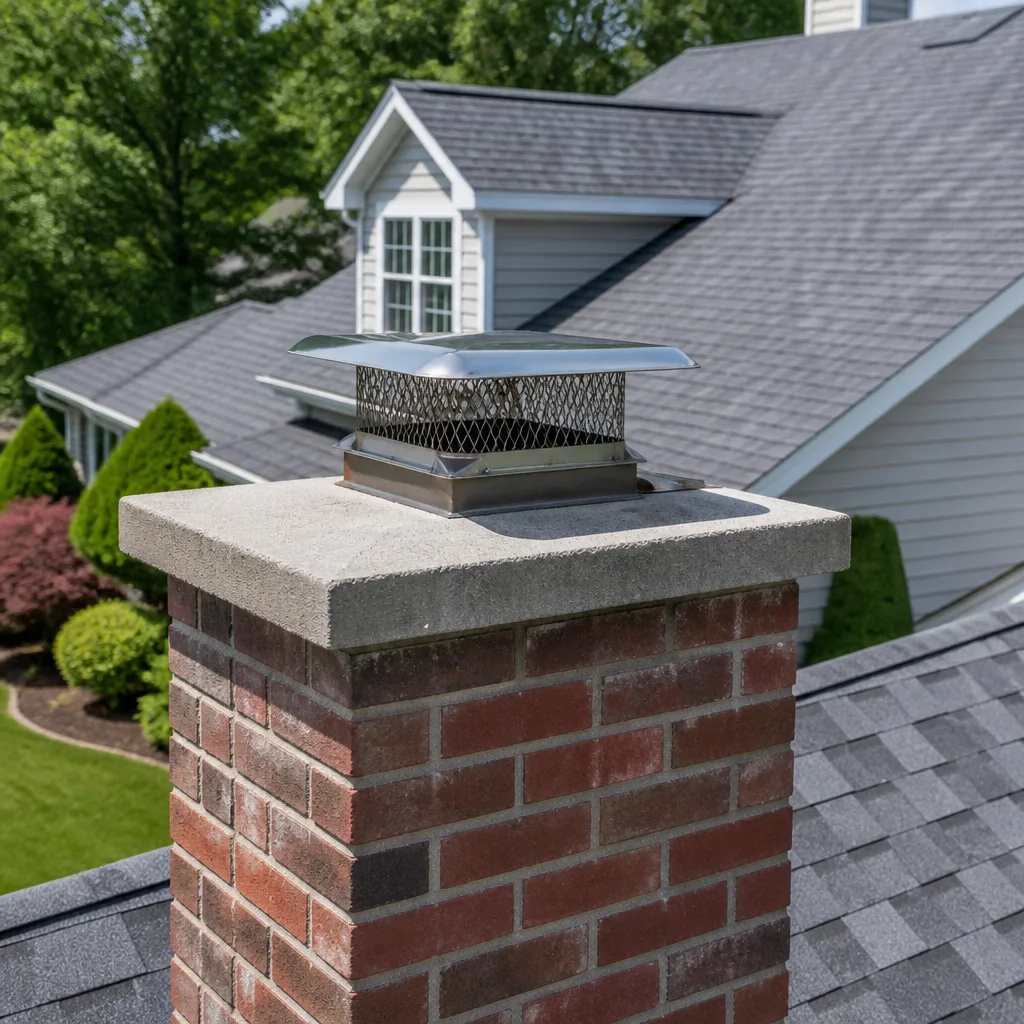 Sweep & inspection
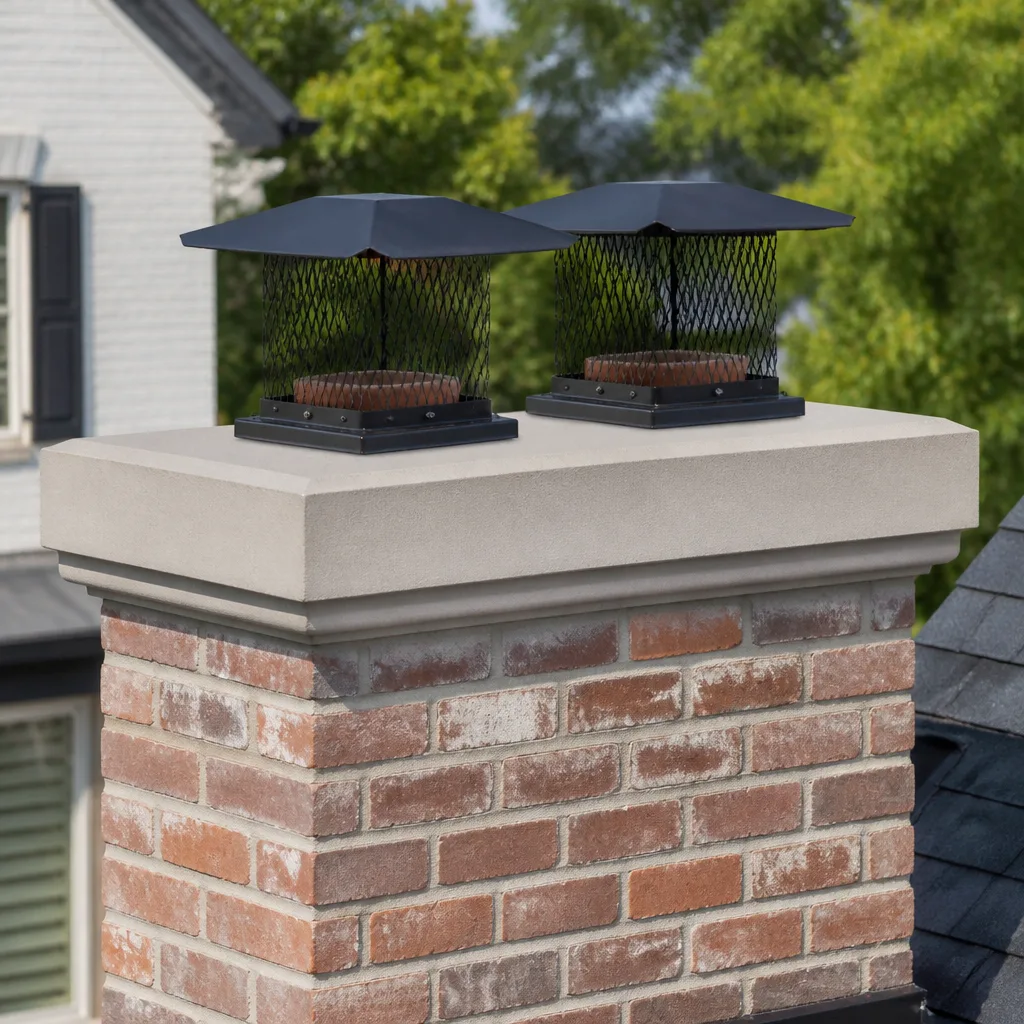 Caps & crowns
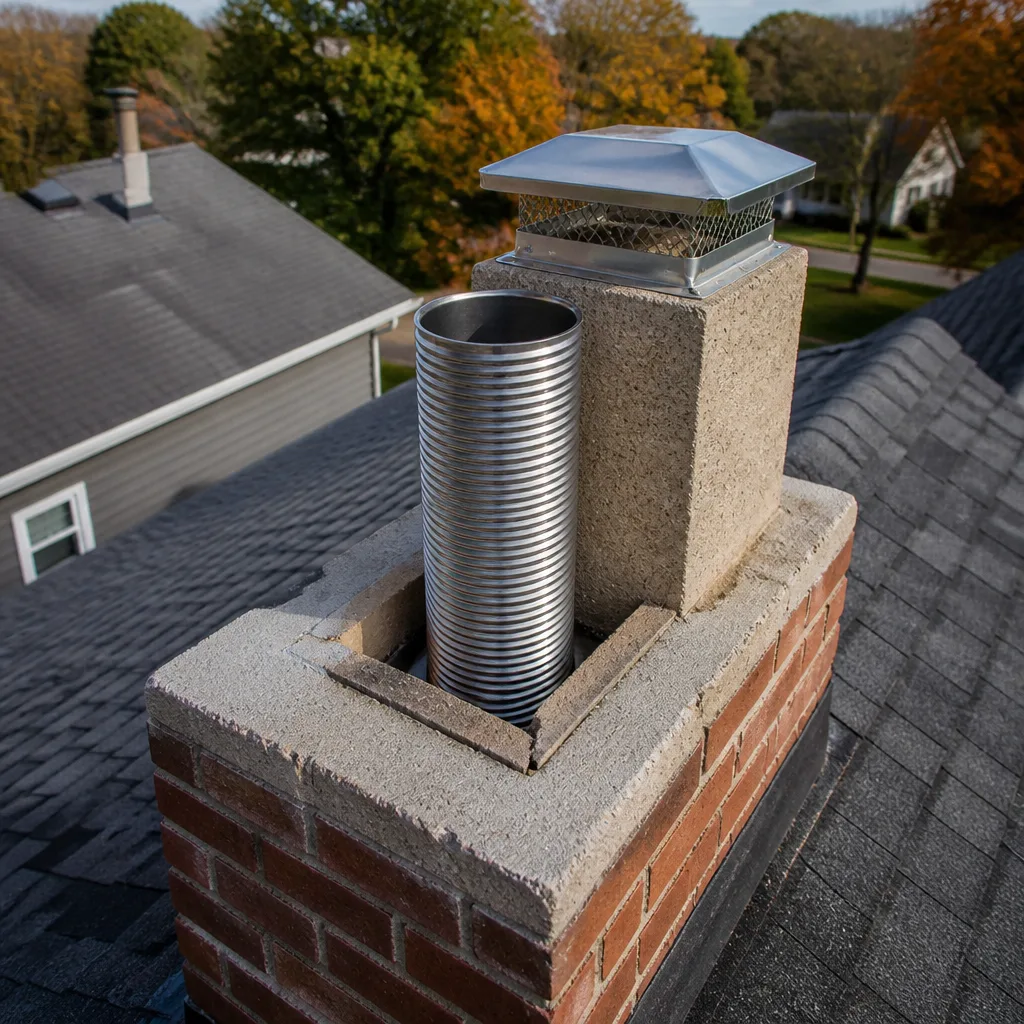 Flue relining
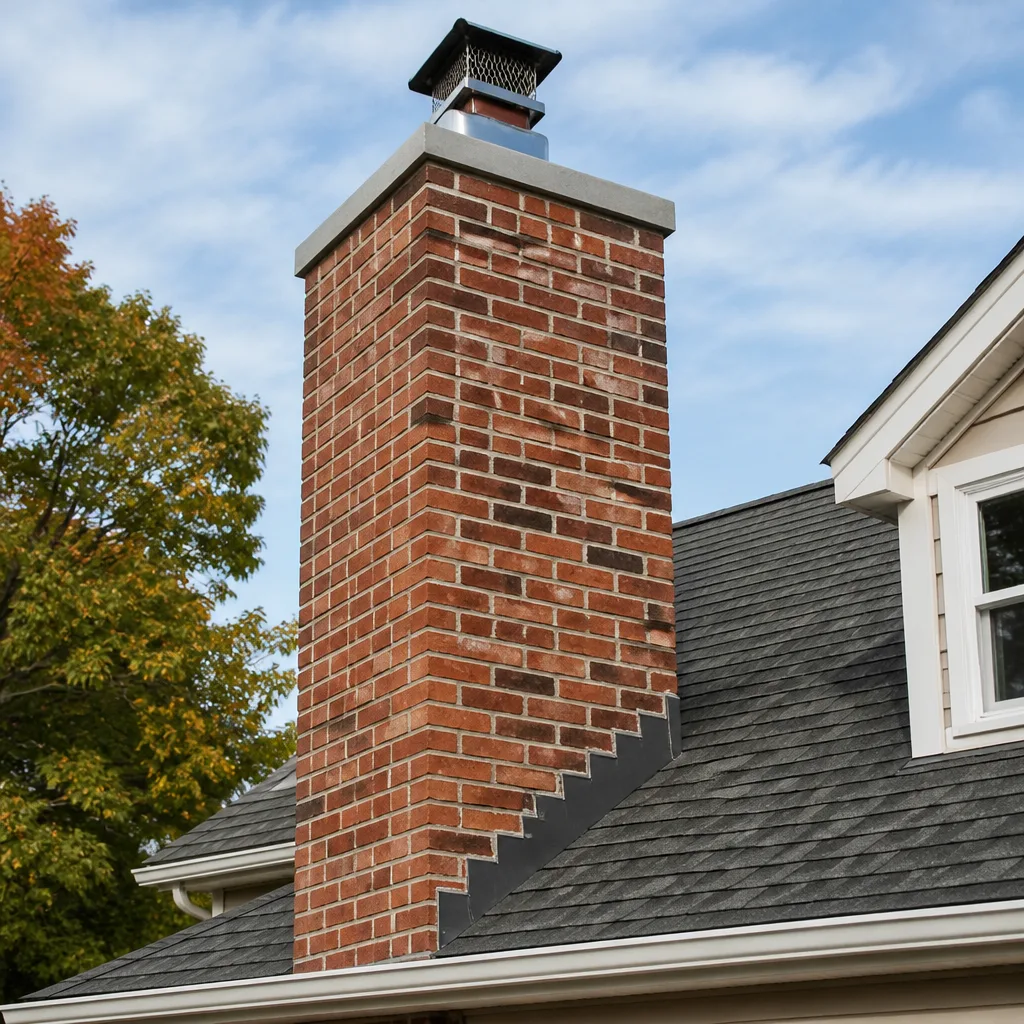 Masonry repair
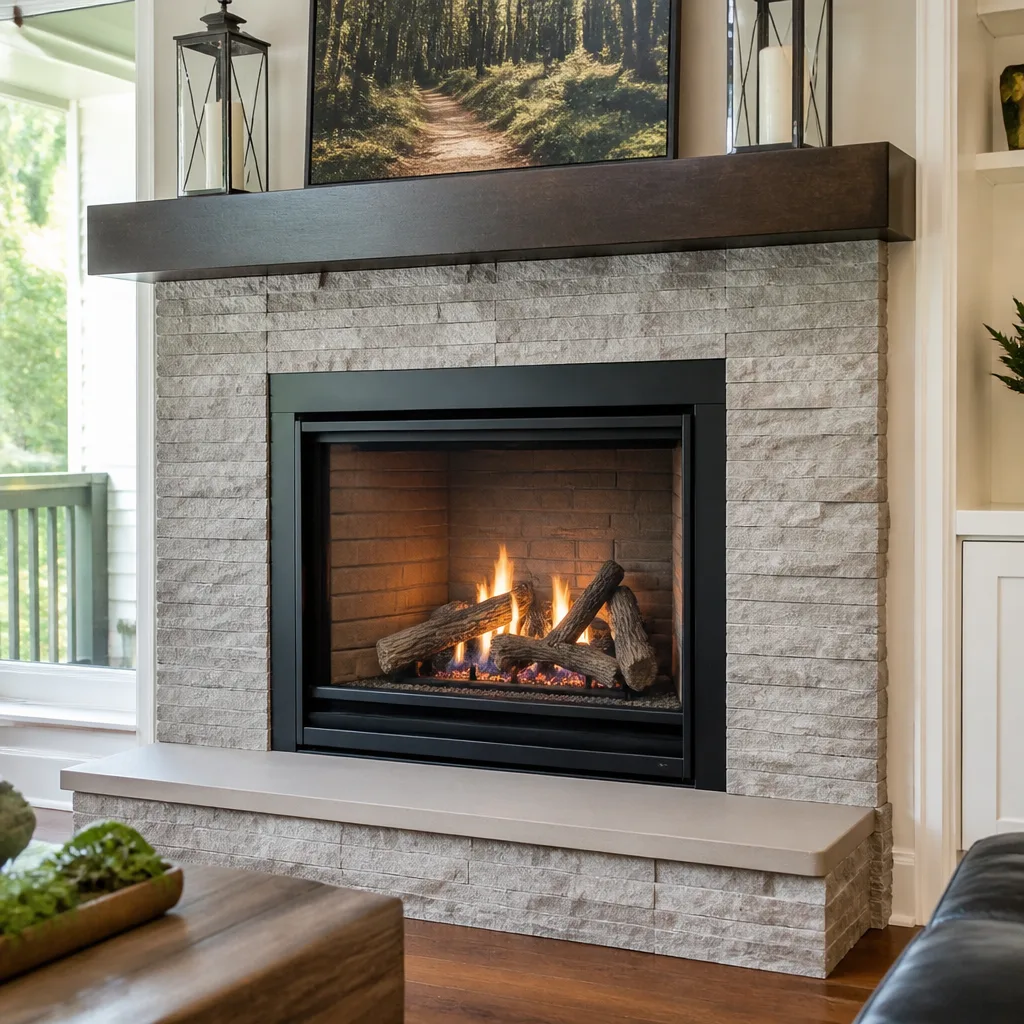 Gas fireplace service
Level 1 sweep and inspection to the NFPA 211 annual standard - flue, crown, cap, and flashing checked and photographed
Chimney sweep logs do not sweep chimneys. They loosen some creosote - which then falls where a brush and vacuum still have to collect it.
How to Hire a Chimney Cleaning Contractor in South Boston: A Step-by-Step Guide
Massachusetts doesn’t license chimney sweeps. Anyone with a brush, a ladder, and a magnetic sign on the truck can legally knock on your door in South Boston and offer to clean your flue. That’s not a knock on regulation for its own sake. It’s the single fact that makes hiring a chimney contractor different from hiring an electrician or a plumber, where a state license at least puts a floor under who can do the work. The gap between a trained specialist and an opportunist is real, and it’s mostly invisible to a homeowner standing in the driveway.
This guide closes that gap. We’ll walk through the credentials worth asking for, the specific upsells that show up in this trade, how to read an inspection report line by line, and the questions that reveal whether a company does its own work or farms it out. By the end you’ll know exactly what to ask before you book a sweep in South Boston, and what a fair answer sounds like.
Quick Answer
To hire a chimney cleaning contractor in South Boston, ask for three things before booking: proof of CSIA certification for the sweep doing the work, a written inspection report with photos you can review before any repair is approved, and a flat price agreed in writing before the job starts. A qualified contractor shows you what they find with a camera and a photo report, recommends repairs only when the evidence supports it, and tells you plainly when work can safely wait. If a company won’t put the price in writing, won’t show you the inside of your own flue, or jumps straight to a liner replacement quote, keep calling.
Styles & brands we work with
- Sweep & inspection
- Caps & crowns
- Flue relining
- Masonry repair
- Gas fireplace service
Table of Contents
- Which Credentials Actually Matter
- Red Flags Specific to Chimney Work
- How to Read a Chimney Inspection Report
- Why a Chimney Specialist Beats a General Handyman
- Questions to Ask Before You Book
- What’s Different About Chimneys in South Boston
- A Step-by-Step Booking Walkthrough
- Common Mistakes to Avoid
- When to Call a Professional
- Frequently Asked Questions
Which Credentials Actually Matter
Two certifications come up again and again in chimney work, and they do different jobs. Knowing what each one covers tells you whether the person on your roof is qualified for the thing you actually need done.
CSIA (Chimney Safety Institute of America) certification is the baseline for sweeping and inspection. It requires coursework, a proctored exam, and continuing education to stay current. A CSIA-certified sweep has been tested on how chimneys work, how creosote builds and ignites, what different venting configurations require, and what to look for during an inspection. It’s the credential that says the person holding a brush over your flue understands the system underneath it, not just the motions of cleaning.
NFI (National Fireplace Institute) certification covers hearth appliances specifically: wood stoves, fireplace inserts, and gas appliances. If you have a wood-burning insert rather than an open masonry fireplace, NFI certification on the installer or technician is the relevant one, because insert installation and venting have their own rules that differ from a straightforward masonry flue.
Ask for both where they apply. A company that does sweeping, cap and crown work, fireplace repair, and liner work should be able to tell you who on the job holds which credential. In our experience, a specialist who tracks this for their own crews answers the question in one sentence. Someone who doesn’t will talk around it.
- CSIA – sweep and inspection competency, tested and renewed
- NFI – hearth appliance installation and service, relevant for inserts and stoves
- State licensing – not required for chimney sweeping in Massachusetts, which is exactly why the other credentials carry the weight
- Liability insurance – ask for the certificate, not just a verbal yes. Roof work and interior protection carry real risk.
One more thing worth knowing: certification is held by individuals, not companies. A company can advertise “CSIA certified” and still send an uncertified helper on a busy week. Ask who is actually coming to the house and whether that person is certified. It’s a fair question and a good one.
Red Flags Specific to Chimney Work
Most chimney work happens on a roof or inside a flue the homeowner can’t see. That information gap is where the wrong contractor makes money. These are the patterns we’ve watched homeowners describe after the fact, and each one is a reason to pause.
High-pressure liner replacement upsells. A liner replacement is a real repair, and sometimes it’s genuinely necessary. But a company that arrives for a routine cleaning and leaves with a same-day liner quote, before you’ve seen photos or had a chance to think, is selling, not diagnosing. A liner recommendation should always come with camera footage showing the actual deterioration and an explanation of why resurfacing or a smaller repair won’t do the job. HeatShield flue resurfacing exists precisely because not every deteriorated liner needs full replacement, and a contractor who never mentions the less invasive option is either unequipped for it or not trying.
Refusal to show inspection photos or video. If a company claims your flue is cracked or your crown is failing, they should be able to show you. Modern inspection cameras record the whole flue run. There’s no reason for a homeowner to take a verbal diagnosis on a repair that costs thousands of dollars.
Cash-only pricing and no written estimate. A written estimate protects you and forces the contractor to put a scope of work in writing. Cash-only, no-paperwork arrangements leave you with no recourse if the work is incomplete or the recommendation was wrong.
Sweeping without protection. A real sweep lays drop cloths and uses a vacuum with HEPA filtration. If someone shows up ready to brush a flue with no containment, stop them before they start, not after the dust settles on your furniture.
Scare tactics about immediate danger. Chimney fires and carbon monoxide are serious risks and a good contractor will tell you when a problem is urgent. But a specific timeline with no evidence (“this needs to happen today or it’s a hazard”) is a pressure tactic. Real urgency comes with footage and a clear explanation.
Door-to-door solicitation in off-hours. Chimney sweeping isn’t a door-to-door trade. Unsolicited knocks offering a “special today only” sweep on a neighbor’s recommendation you can’t verify is a pattern worth recognizing.
How to Read a Chimney Inspection Report
A chimney inspection comes in three levels, and knowing which one you’re getting tells you what the report should contain. Level 1 is a visual check of accessible components during a routine sweep. Level 2 adds a camera inspection of the flue and is standard when you’re buying a home, changing appliances, or after a chimney fire. Level 3 involves opening up concealed areas and is only for specific diagnostic situations. Most South Boston homeowners with an active fireplace are getting a Level 1 or Level 2.
Here’s what a useful report contains, and what vague language to question.
- Component-by-component findings. Cap, crown, flue liner, damper, smoke chamber, firebox, and exterior masonry should each get a note, even if the note is “no defect observed.” A report that skips components is a report that wasn’t thorough.
- Photos or video for any noted defect. No picture, no proof. If the report says “liner deterioration observed,” there should be a photo of the deterioration.
- Specific language instead of vague language. “Deteriorated” is vague. “Missing mortar joints in the upper third of the flue, visible on camera” is specific. Ask for the specific version.
- A recommendation tied to a finding. Every recommended repair should point back to a finding in the report. If a repair appears that doesn’t match a finding, ask why.
- A stated timeline or priority. Good reports distinguish between “address now” and “monitor over time.” Both are valid outcomes. A good contractor will tell you when work can safely wait.
Watch for these words in particular: “may need,” “recommend considering,” “potential concern,” and “several issues.” These phrases often signal a recommendation that isn’t well-supported by the evidence. That doesn’t mean every “may need” is wrong. It means you should ask which finding drives it and what the consequence is if you don’t act. If the answer is vague, the recommendation probably is too.
Ask for a chimney inspection as a standalone service and see whether the company treats it that way. Our inspection service exists on its own, separate from any repair quote, because a diagnostic that’s really just a sales funnel isn’t a diagnostic. On cape and crown concerns specifically, a chimney cap & crown evaluation should tell you whether the issue is cosmetic or letting water into the flue, since those outcomes have very different urgency.
Why a Chimney Specialist Beats a General Handyman
A chimney looks like a simple target: a hole in a masonry stack that needs cleaning. It’s not. The chimney system runs from the cap at the top through the crown, the flue tile or liner, the smoke chamber, the damper, and the firebox. A problem at any one of those points can look like a problem somewhere else. A smoky firebox often traces to a flue sizing issue, not a firebox defect. A water stain on the ceiling often traces to a missing cap, not a flashing problem. A general handyman who “also does chimneys” typically owns one tool for one part of that system.
A dedicated chimney specialist brings three things a handyman doesn’t:
- The right tools. A proper sweep rod and brush combination for the flue type, an inspection camera, a HEPA vacuum, and masonry tools for crown and cap work. A pressure washer and a single brush don’t cover the range.
- Material access. A specialist works from a curated set of professional chimney brands: DuraFlex for full liner systems on deteriorated flues, HeatShield for resurfacing mortar joints that don’t need a full replacement, Gelco and Famco for custom-fit caps and venting, Olympia Chimney and Copperfield for other components in the assembly. The right material for the repair matters, and general contractors default to generic hardware-store parts because they don’t know the trade brands.
- Liability coverage for the actual work. Roof work and masonry repair carry specific insurance needs. A handyman’s general liability may not cover chimney repairs or the interior damage a botched sweep can cause.
In our experience, the “simple” cleaning is where the specialist advantage shows most. A cleaning that puts a camera down the flue first, that notices a hairline crack in the flue tile, that flags a failing damper you didn’t know about, is a cleaning that keeps you ahead of a repair. The same cleaning done by someone with a brush and a handheld flashlight gets your flue clear and tells you nothing else. If the flue is actually clear, a proper chimney sweep also tells you that, and a sweep that says “all clear” with evidence is worth more than one that finds a problem every time.
Questions to Ask Before You Book
The questions below are designed to reveal what a company actually is. You’ll often get faster answers on the phone than in an email, and the answers themselves tell you a lot about how the company runs.
- “Are you CSIA certified, and will the person doing the work be certified too?” The second half of that question is where many companies get vague. A clear, direct yes is what you want.
- “Do you use a camera to inspect the flue, and do I get the photos or video?” A company that includes a camera inspection and a photo report in every sweep answers this in one sentence.
- “Can you give me a flat price in writing before the job starts?” The written estimate sets the final price, and any company confident in its scope quotes flat.
- “Who does the repair work if something needs fixing, you or a subcontractor?” If a company subcontracts liner work or cap work, they may not have the diagnostic depth to tell you what’s actually wrong. Full-system capability means inspections, sweeping, cap and crown work, fireplace repair, and structural repair are all handled by the same specialist.
- “Which chimney products do you stock and train on?” This reveals whether the company is equipped for the full range of repairs. DuraFlex, HeatShield, Gelco, Olympia Chimney, Famco, and Copperfield are the names to listen for. A company that works with these brands can match the material to the repair.
- “If you find a problem, will you explain why a smaller repair won’t work?” This is the honesty question. A specialist who can explain why HeatShield resurfacing is sufficient instead of a full DuraFlex liner replacement, or the reverse, is diagnosing. A specialist who can only offer one of those is selling.
- “When can the work safely wait?” A fair answer distinguishes urgency levels. A company that treats every finding as urgent is showing you how they operate.
These questions take ten minutes on the phone and save you thousands. We’d rather answer them before booking than have a homeowner call back unsure of what was recommended and why.
What’s Different About Chimneys in South Boston
South Boston’s housing stock is older than in most parts of the city that have been built out since the 1980s. Row houses and triple-deckers from the late nineteenth and early twentieth centuries are common, and many have original masonry chimneys that have been through more than a hundred winters. That age shows up in specific ways.
Shared chimneys are common in South Boston’s rowhouse neighborhoods, and shared chimneys mean shared problems. A flue that serves two units can have different deterioration patterns on the sides facing each other’s fires, and the crown on a shared stack often fails unevenly. Hiring a specialist who understands shared masonry construction matters here, because a repair on one unit’s side can affect the other’s venting. Ask whether the contractor has worked on shared chimneys before, and listen for whether they raise the question themselves.
New England’s freeze-thaw cycling is hard on masonry. Water gets into a small crack in the crown, freezes, expands, and opens it wider. Over a few seasons, a hairline crack becomes a real water intrusion path, which then damages the flue liner from the inside. Inspections in South Boston benefit from extra attention to the crown and cap, because the top of the chimney takes the worst of the seasonal cycling. When you hear “the crown looks fine” without a camera or close-up photo, that’s worth a follow-up question.
Burning season runs long here. Wood-burning inserts and open fireplaces get used from October well into March, and that’s several months of creosote accumulation per season. Annual sweeping is the safe standard for an actively used fireplace, and a South Boston home with a wood-burning insert used regularly should be on a yearly schedule, not a “when it feels like it” one. A clean chimney isn’t just about performance. It’s about not burning your house down, and creosote buildup is the reason the annual rhythm exists.
One more local note: many older South Boston homes still have unlined or clay-tile-lined flues that were not built for the heat output of a modern insert. If you’re adding or replacing an insert, the liner question comes up quickly, and it’s worth asking up front whether the current liner matches the appliance’s requirements. That’s a conversation a chimney specialist has regularly.
A Step-by-Step Booking Walkthrough
Here’s the process we’d recommend to any South Boston homeowner, whether they call us or someone else. It’s about six steps from first phone call to a clean, documented flue.
- Screen on the phone. Ask the credential and photo-report questions from the section above. You should get clear answers within a couple of minutes. Ambiguity at this stage is information.
- Book the sweep with a written quote. Ask for the flat price in writing and confirm what it covers. A quote that includes inspection and a photo report is different from a quote that’s just the brush work.
- Protect the interior before work starts. The sweep should lay drop cloths and set up a HEPA vacuum before touching the flue. If they don’t, ask them to before work begins. This is a reasonable request.
- Watch the camera inspection. Any qualified sweep will show you what they see. Ask to look at the monitor. The whole point of the camera is evidence, and evidence should be shown, not summarized.
- Read the report before approving work. Take your time. Match every recommendation to a specific finding. Ask which finding drives each recommendation and what happens if you wait.
- Book the repair separately if one is needed. There’s no reason to approve a repair on the spot unless it’s genuinely urgent and you’ve seen the evidence. A specialist will be comfortable with a follow-up booking.
Once the work is done, keep the report. The record of your flue’s condition at a given point is useful for next year’s comparison, and it’s useful if you ever sell the home. A photo report from last season is the baseline for this season.
When you’re ready to book a chimney sweep in South Boston, that’s exactly the process we follow: flat price in writing, camera inspection, photo report, and a clear explanation of what can wait. We answer 24/7. Fast dispatch from 7am to 7pm, Sunday through Friday.
Common Mistakes to Avoid
- Hiring on price alone from a flyer or a door knock. A chimney sweep quote that undercuts every other one has to make the money back somewhere, and it’s usually in the upsell or the shortcut. Ask what’s included in the price, not just what the price is.
- Approving a liner replacement without seeing the footage. Liner replacements are necessary sometimes and oversold often. If you haven’t seen the inside of your own flue on camera, you don’t have enough information to approve one.
- Assuming a “chimney sweep” does chimney repair. A sweep with a brush and a camera can clean and inspect but may not handle masonry or liner work. Ask what the company actually does in-house, and confirm before filing it away as a future option.
- Skipping annual sweeping because the fire “looked fine last season.” Creosote buildup doesn’t announce itself. The only signal many homeowners get is a chimney fire, and that’s the one you want to avoid. Annual sweeping is the standard for an actively used fireplace.
- Ignoring the crown and cap. The top of the chimney is the part that takes the weather, and South Boston’s freeze-thaw cycles do the most damage there. A crown inspection with photos belongs in every annual sweep.
- Hiring a general handyman for “just a cleaning.” Even a routine sweep benefits from the specialist’s diagnostic depth, and the general liability coverage of a handyman may not extend to chimney work. It’s a small savings against a much larger risk.
- Trusting a report with no photos. If you can’t see what was found, you can’t evaluate whether the recommended work is needed. Ask for the photos every time.
When to Call a Professional
Some situations need a chimney professional and can’t be handled by any other trade. If you smell a strong creosote odor on warm days, if smoke rolls back into the room instead of going up the flue, if you see staining on the chimney exterior or on interior ceilings near the stack, or if you hear a roar or popping sound from the flue while a fire is burning, stop burning and call a specialist. Creosote ignition and carbon monoxide exposure are the two serious risks, and both deserve a professional inspection rather than a wait-and-see approach.
If you’re planning to use a wood-burning insert this season and haven’t had the flue inspected, that’s a professional call too. The insert’s venting requirements have to match the flue’s condition, and neither can be evaluated without a camera. And if it’s simply been more than a year since the last sweep, book one before the burning season starts. We offer free estimates in South Boston, call (855) 550-7472. We answer 24/7. Fast dispatch from 7am to 7pm, Sunday through Friday.
Frequently Asked Questions
A routine chimney sweep in South Boston typically falls in the range of what New England homeowners pay for an annual cleaning and inspection, and the written estimate sets the final price for your specific chimney. Cost depends on the flue configuration, the level of inspection needed, and whether a photo report is included. Ask for the flat price in writing before booking so there aren’t surprises on the day. Call (855) 550-7472 for an exact quote. The estimate is free.
An actively used fireplace or wood-burning insert should be swept once a year, before or at the end of the burning season. That annual cadence is the standard because creosote buildup is cumulative and doesn’t give visible warning. If you burn frequently through the long New England season, don’t let a year slip by. Call (855) 550-7472 to schedule a sweep in South Boston and we’ll get you on the calendar.
Sometimes a liner replacement is the right answer, and sometimes a less invasive repair like HeatShield flue resurfacing handles it. The difference should be visible on camera, and you should see the footage before approving anything. If a liner has cracked tiles or missing mortar joints, resurfacing can often restore it. If the liner is unlined or heavily deteriorated through its full thickness, replacement is the correct fix. Ask the contractor to explain why the less invasive option won’t work if they’re recommending replacement. Call (855) 550-7472 for an inspection with photos. The estimate is free.
Creosote accumulates in the flue with every fire, and at a certain buildup level it can ignite. A chimney fire is the immediate risk; carbon monoxide exposure from a blocked or damaged flue is the other. Neither shows up as an obvious symptom until the situation is urgent, which is exactly why annual sweeping exists. If it’s been more than a year, book now. Call (855) 550-7472. We answer 24/7.
No. Massachusetts does not require a state license to perform chimney sweeping, which is why the CSIA and NFI credentials carry the weight they do in this trade. That’s also why you should ask specifically about certification and liability insurance when hiring in South Boston. A contractor confident about both will answer immediately.
A dedicated chimney specialist handles cap and crown work as part of the full chimney system. Cap and crown issues are chimney issues, not roofing issues, and a specialist with access to custom-fit caps and professional masonry materials is better equipped to address them than a roofer. If you’ve noticed a missing cap or a cracked crown, ask for chimney cap & crown service during the inspection. Call (855) 550-7472 for a free estimate.
The Bottom Line
Hiring a chimney contractor in South Boston comes down to three questions: are they certified, will they show you the evidence, and are they equipped for the whole system? The answers tell you more than any review page or advertisement. A CSIA-certified sweep with a camera and a photo report, a flat price in writing, and a specialist who handles sweeping, cap and crown, fireplace repair, and liner work from the same company, is the standard worth holding out for. Anything less is a bigger risk than the money you’d be saving. If it’s been more than a year, or if something in the chimney looks off, call now.
Chimney Sweep South Boston covers the full system from cap to firebox: sweeping, cap and crown, fireplace repair, structural chimney repair, and standalone inspection. Our technicians have up to 11 years of experience, and we work with DuraFlex, HeatShield, Gelco, Olympia Chimney, Famco, and Copperfield to match the material to the repair. If you’re ready to book, call (855) 550-7472. We answer 24/7. Fast dispatch from 7am to 7pm, Sunday through Friday.
Written by the team at Chimney Sweep South Boston.
See the difference
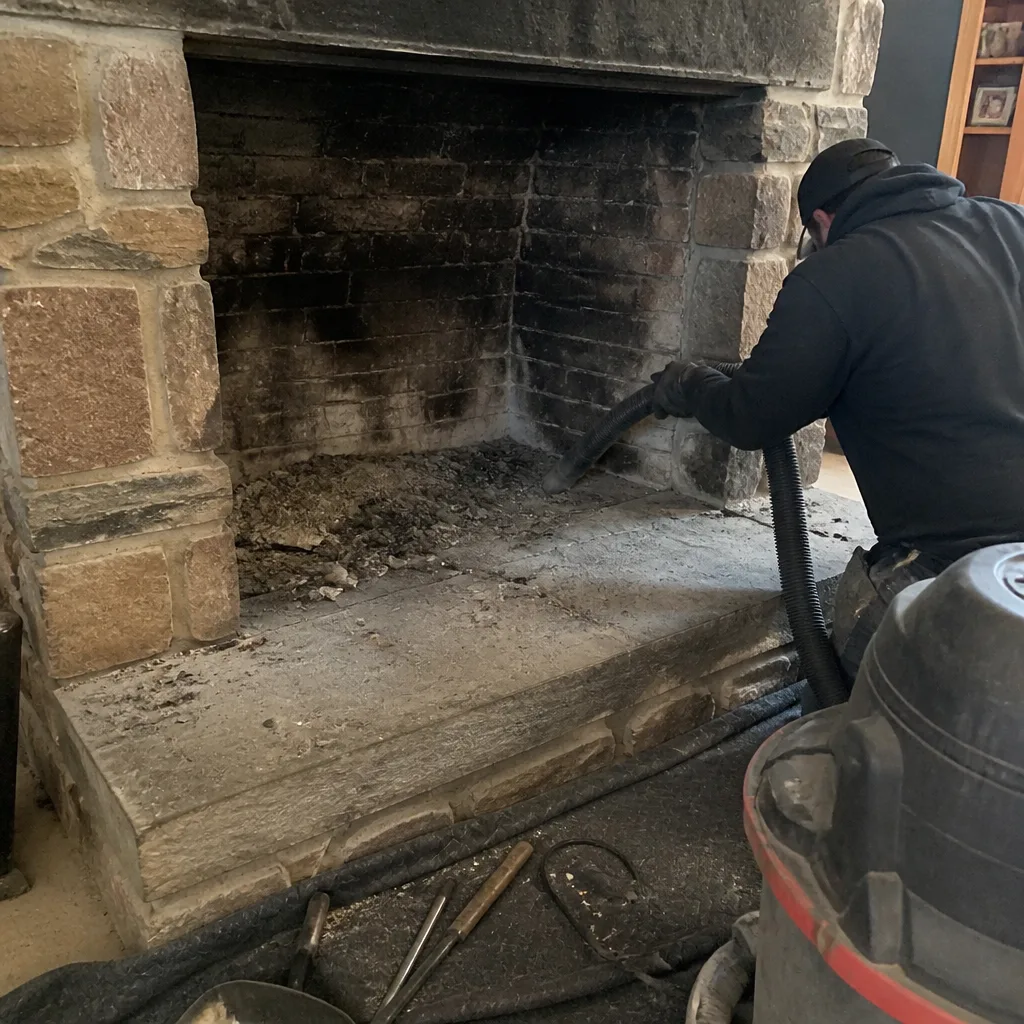 Before
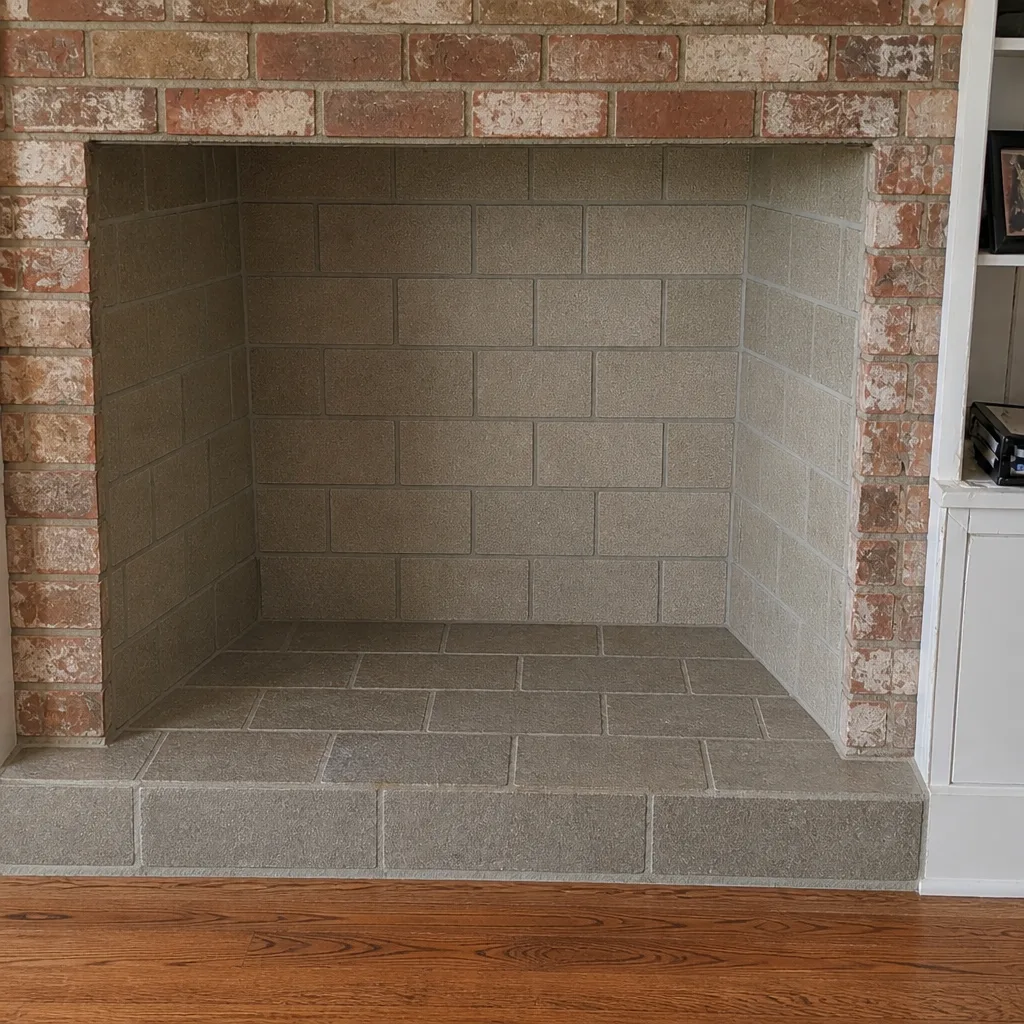
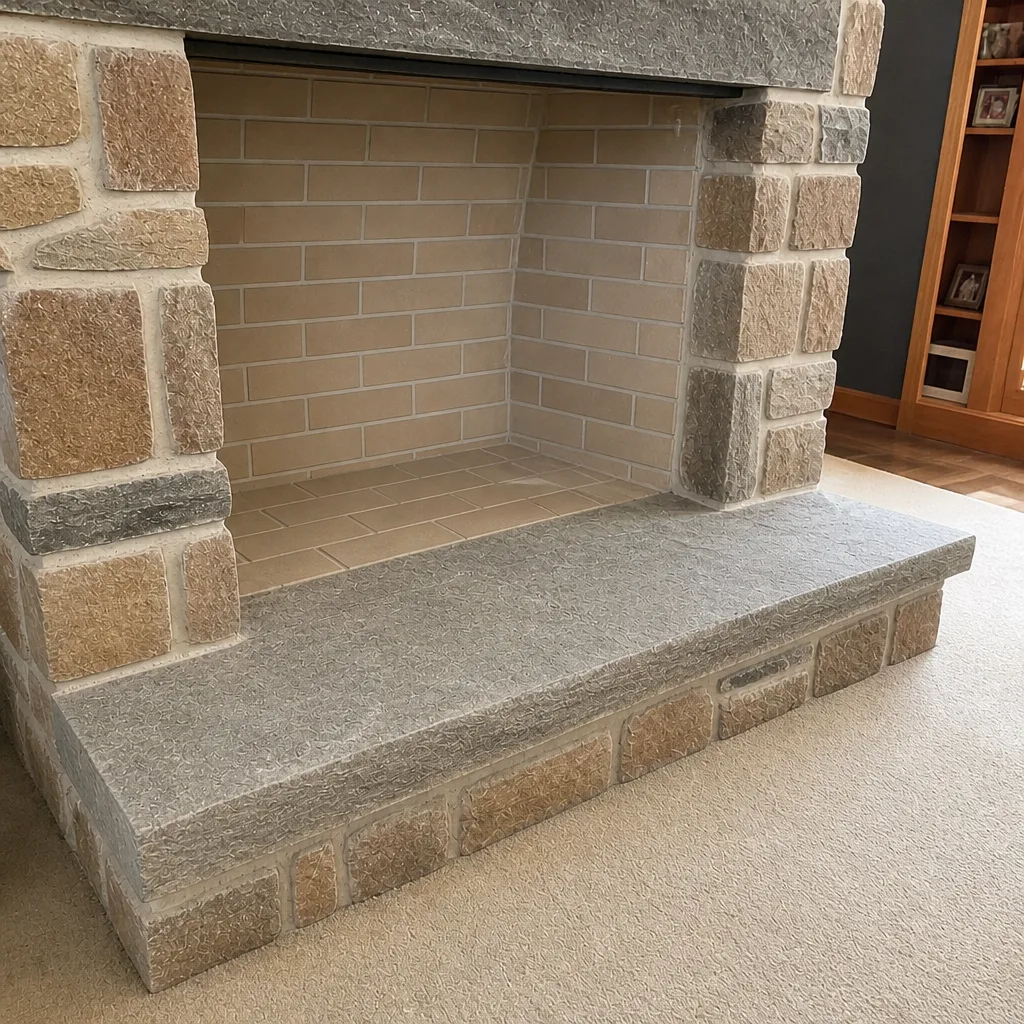 After
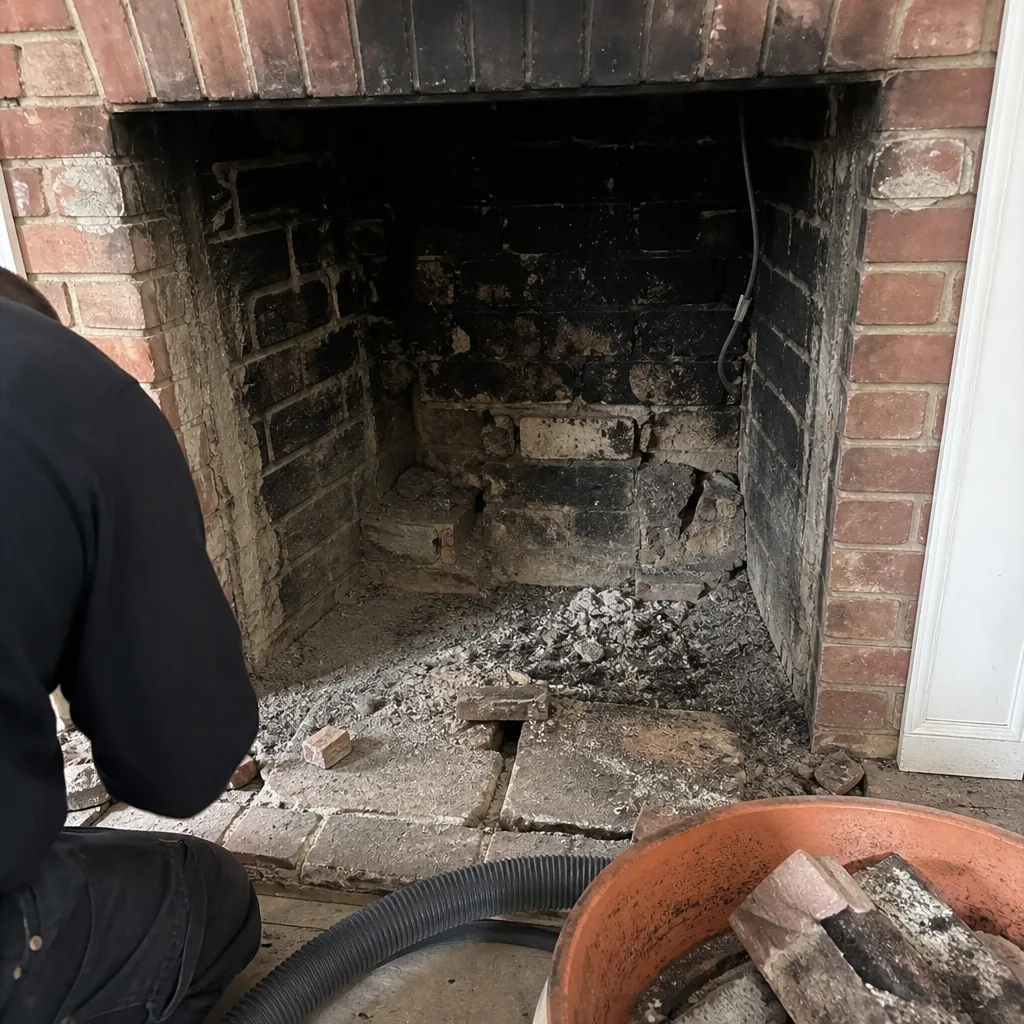
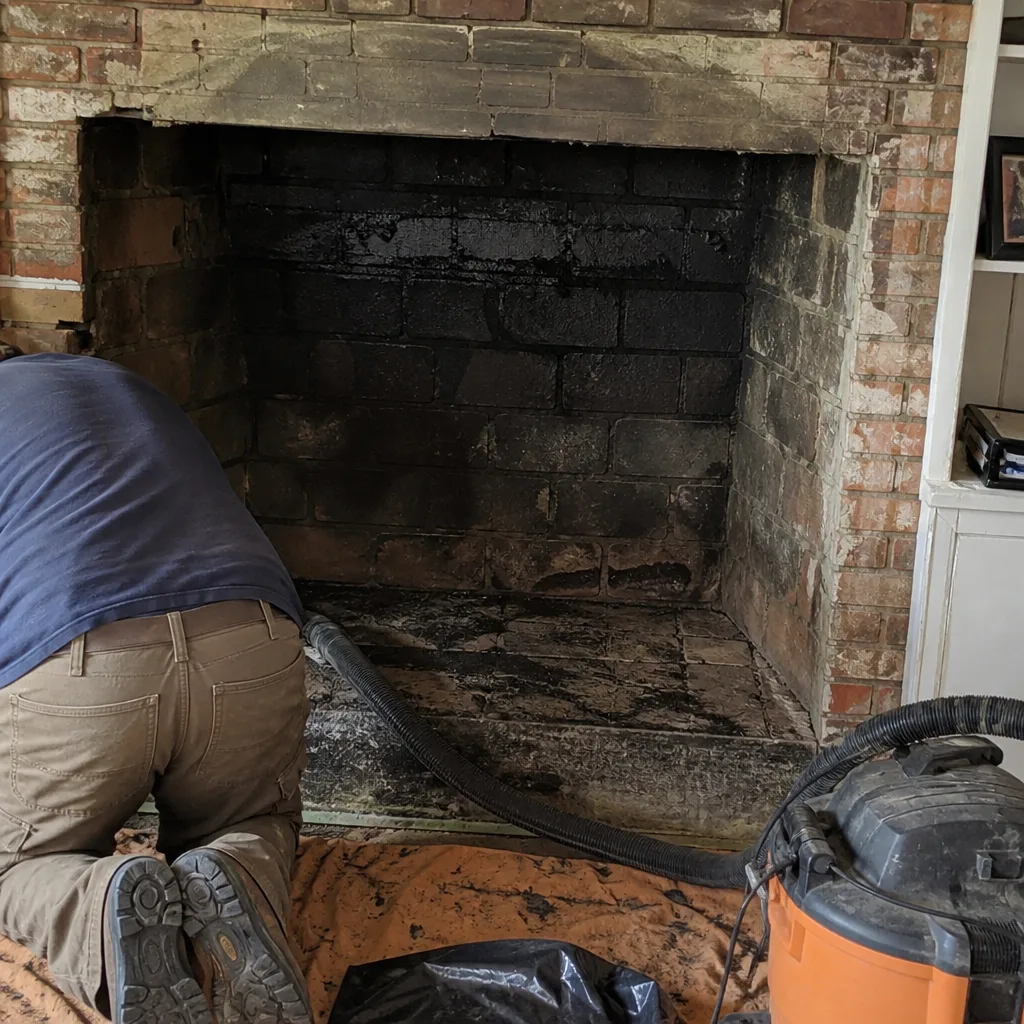 Before
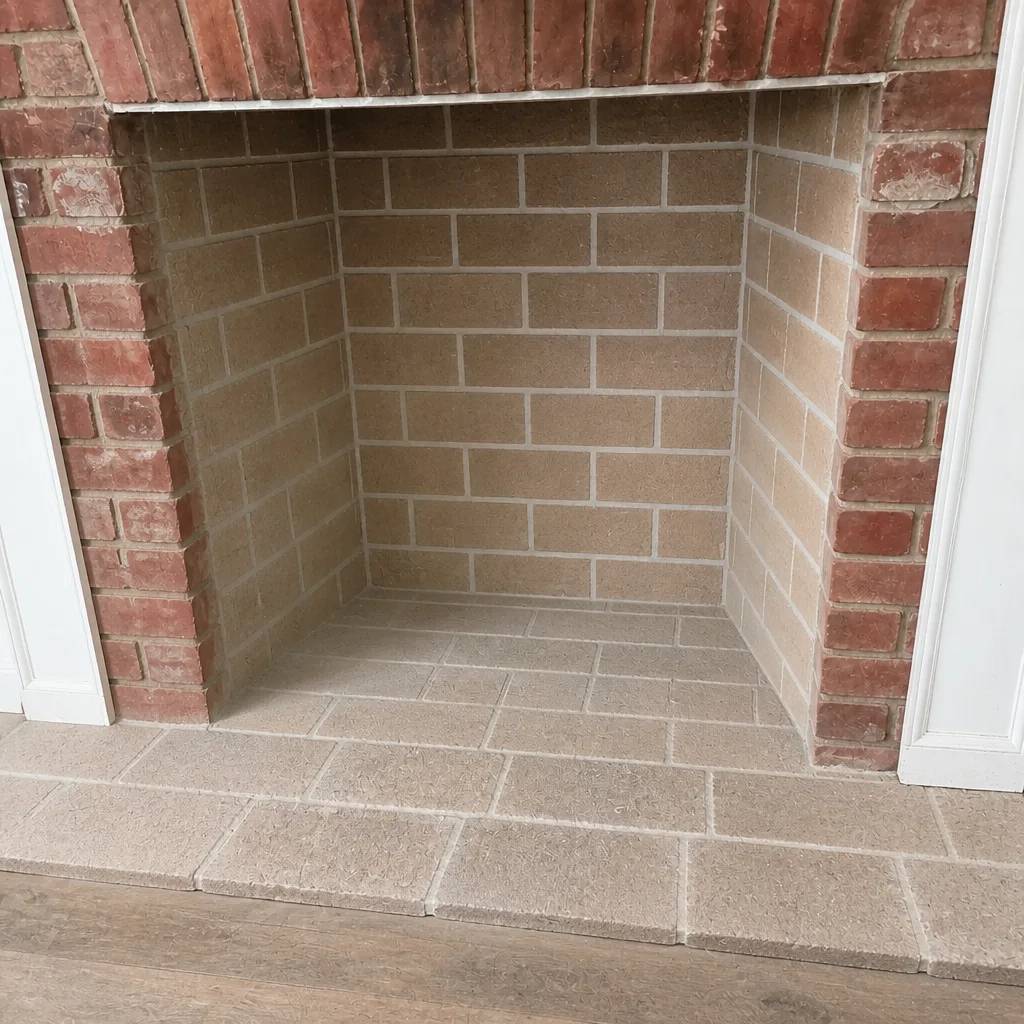
 After
 Before
 After